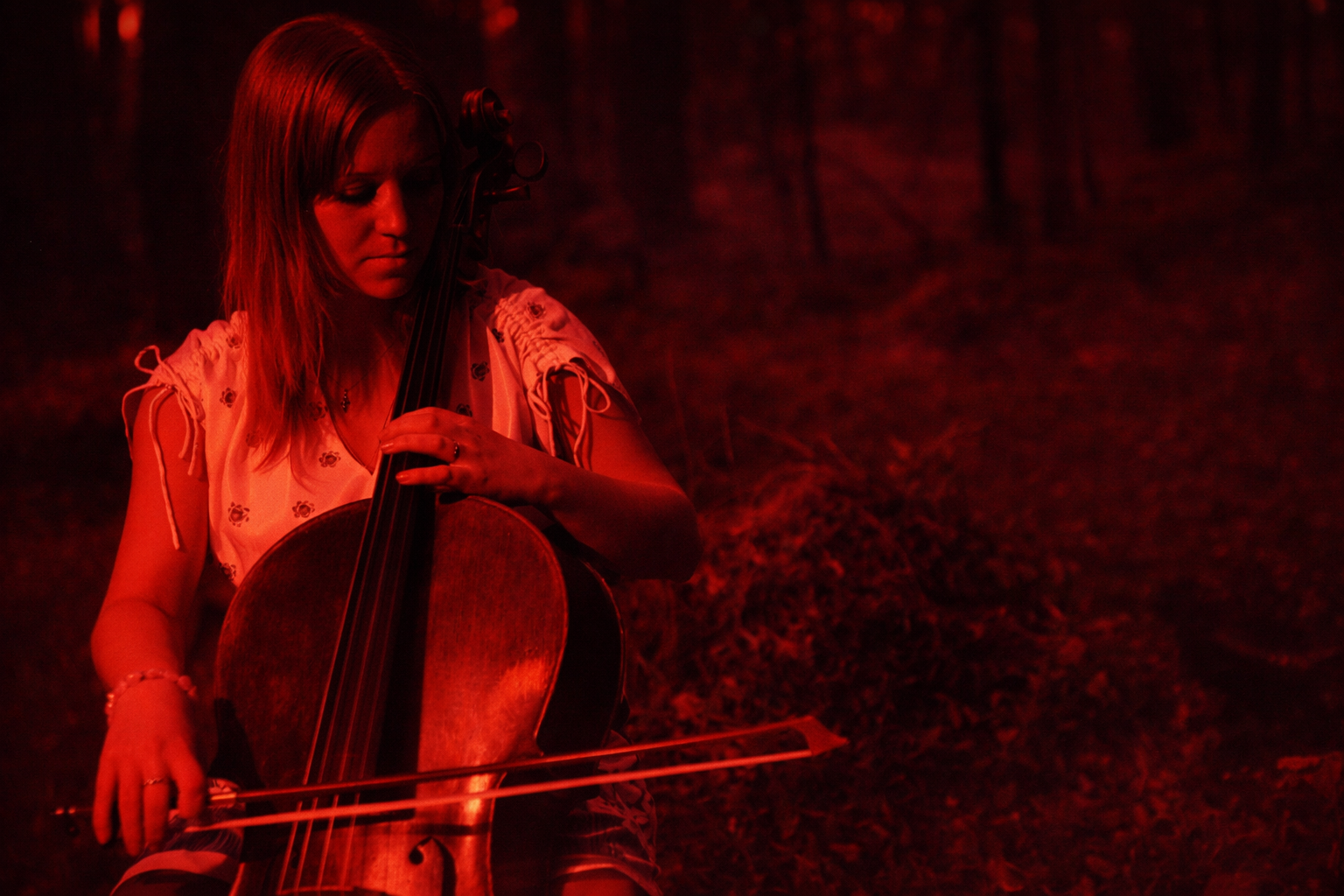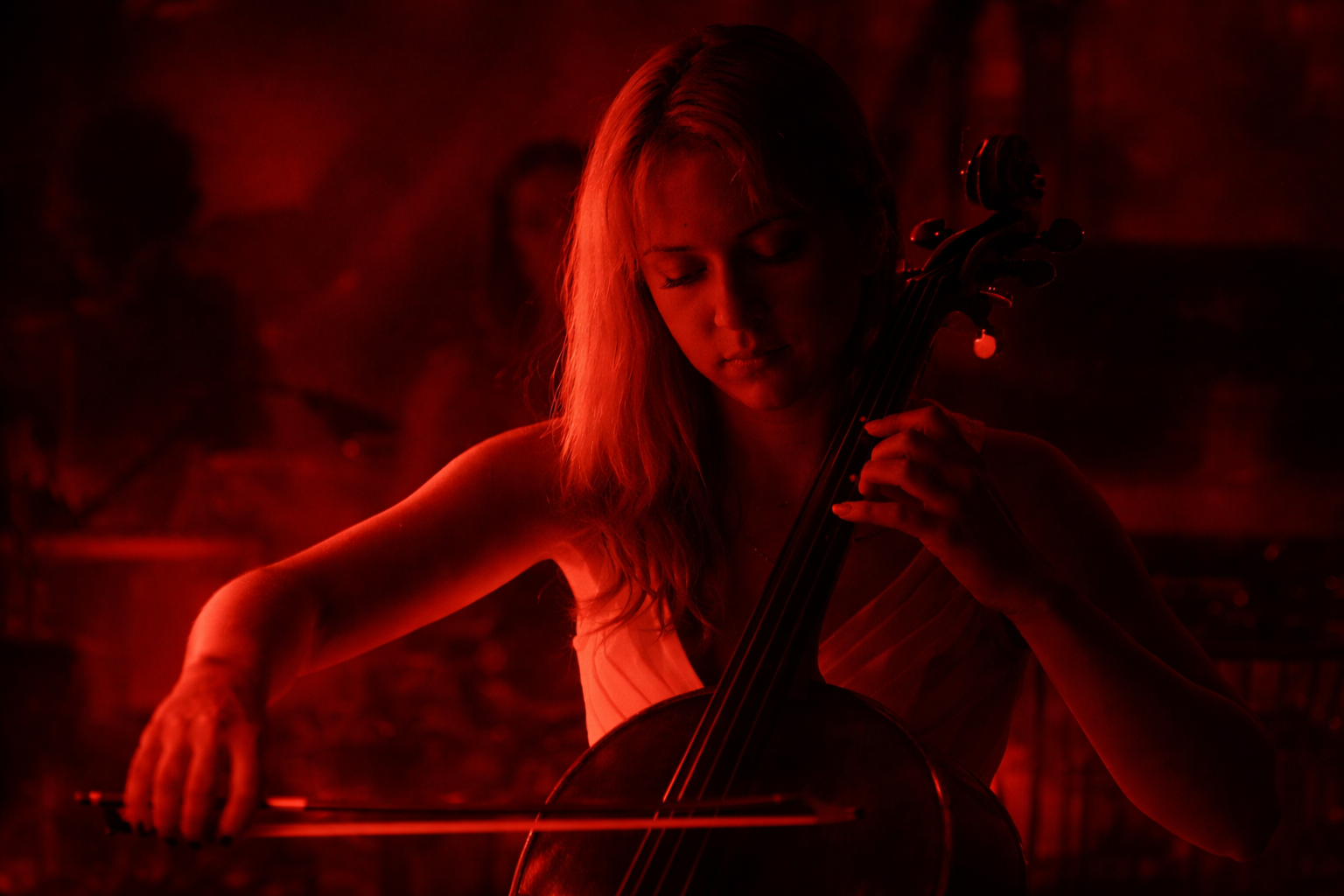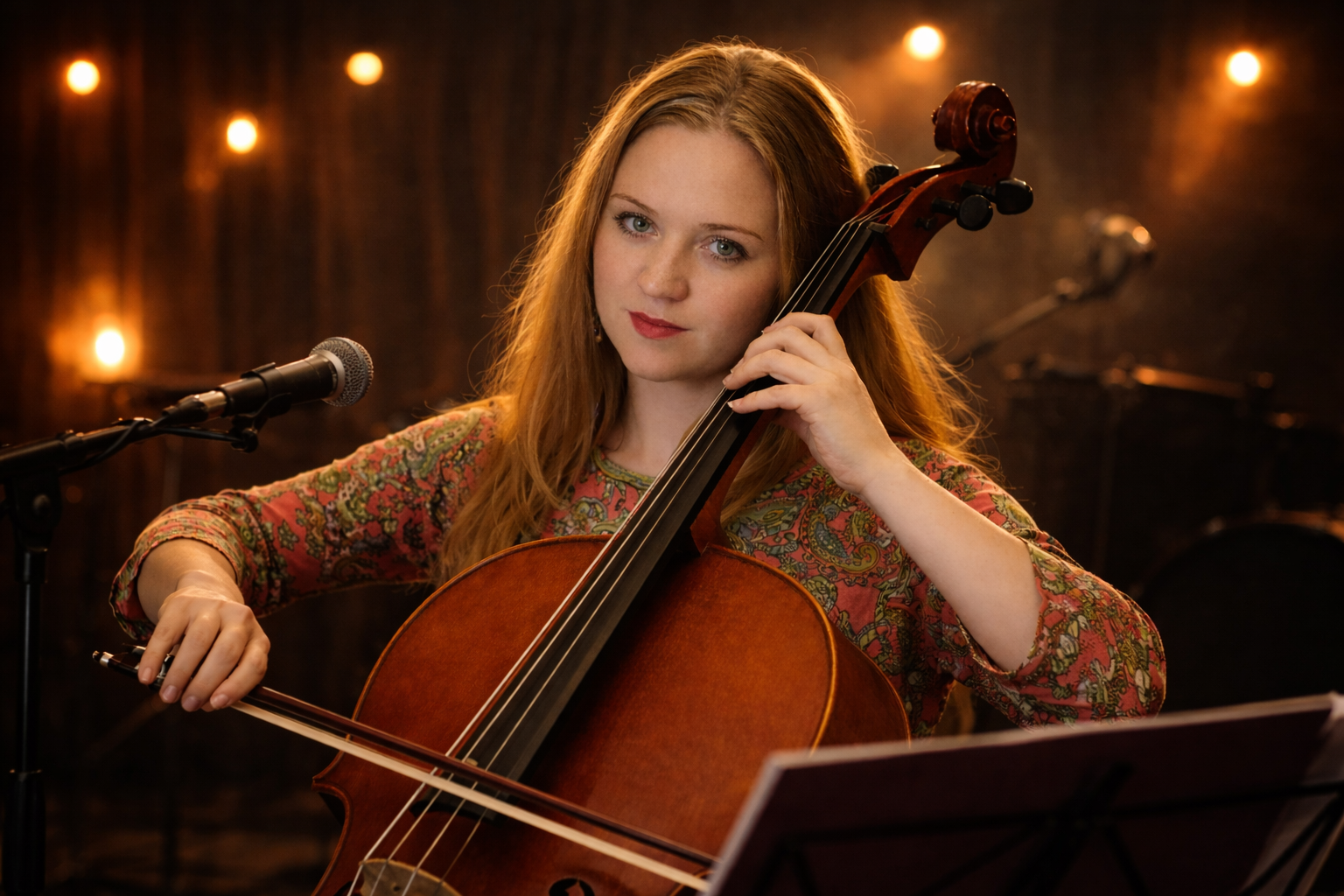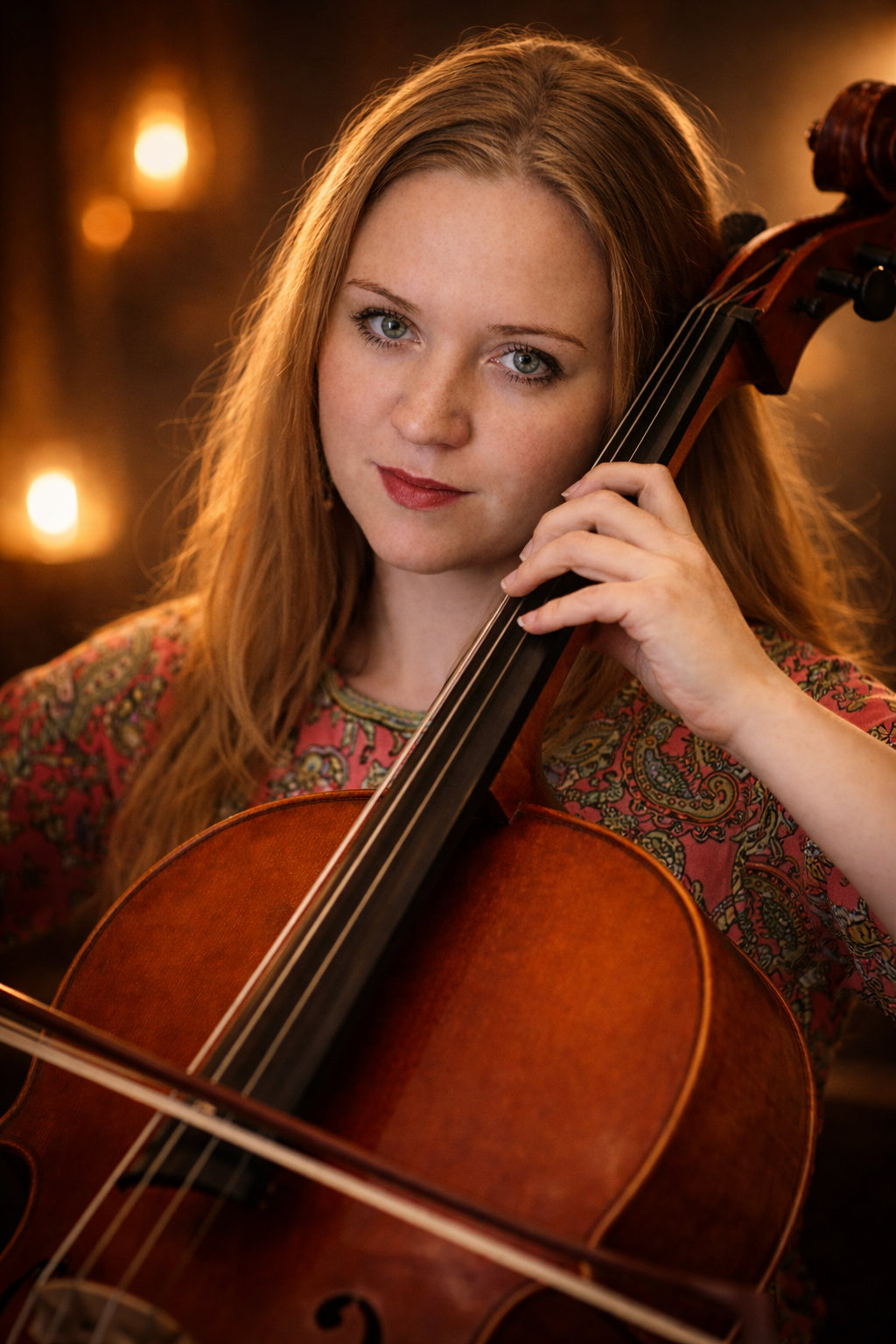
At the Baltika School of Arts, there is a true creative soul — Marina Vyacheslavovna Udalova.
Marina Vyacheslavovna is not merely a teacher. Her art is more than technical mastery. Her cello sings as if it knows some ancient secret. And indeed, this is so — for in her hands continues to sound the immortal school of the great Semyon Matveyevich Kozolupov, the founder of the national cello school, the man who raised Russian cello performance to unattainable heights.
Marina Vyacheslavovna’s musical formation unfolded within this high tradition, under the guidance of teachers who were direct followers of S. M. Kozolupov and K. A. Minyar-Beloruchev. The very first thread connecting her to these great names was remarkably delicate yet strong: her first mentor once shared a student desk with the legendary Mstislav Rostropovich. Thus, from hand to hand, from heart to heart, the great art of the cello was passed on to her.
Her artistry and virtuoso mastery have received the highest recognition on many stages. Marina Vyacheslavovna is a multiple laureate of prestigious international and national competitions. Her triumphant path has been marked by awards in Germany (“Musical Fireworks,” Baden-Württemberg), Estonia (“Baltic Stars,” Narva), Bulgaria (“Slavic Wreath”), and Russia (the All-Russian Competition “Glory to Glinka!”, Smolensk), where she won first prizes. In addition, in 2025 Marina Vyacheslavovna was awarded laureate titles at three international competitions, bearing the names of the great Russian composers Shostakovich, Borodin, and Stravinsky.
Today, Marina Vyacheslavovna passes on invaluable knowledge and a refined understanding of music to her students. Under her guidance, children master not only technique but also the very soul of the cello, absorbing traditions in which the power and spirituality of the Russian cello school are united.
info@marinaudalova.com
I suppose I should begin by saying that my cello education has been solid and truly fundamental. I first studied at the Leningrad Music School with Irina Nikolaevna Bogdanovich (Zelenetskaya). Irina Nikolaevna herself graduated from the Moscow Conservatory together with Mstislav Leopoldovich Rostropovich, studying under the famous pedagogue Semyon Matveyevich Kozolupov.
Later, at the music college in Yekaterinburg, I studied with Vladimir Nikolayevich Khramtsov, who had once been a student of Rostropovich at the Moscow Conservatory. I completed my conservatory studies with Sergey Fyodorovich Peshkov, who had studied under Georgy Dmitrievich Tsomyk — a student of Konstantin Alexandrovich Minyar-Beloruchev — at the Ural Conservatory.
For this reason, when on January 27, 1997, the snow-covered city of Yekaterinburg welcomed Maestro Mstislav Rostropovich for a concert, it became a historic event not only for the entire city, but also personally for me.
At that time, I was a student at the P. I. Tchaikovsky Music College. I was lucky enough to buy a ticket — for the second row, right next to the stage. I arrived early. While I was taking off my coat in the foyer of the Philharmonic Hall, the central doors suddenly opened, and a group of tall, imposing men in black suits entered — four or five of them. These were bodyguards, and they seemed to be guarding above all a cello, carried in a large wheeled case. Rostropovich followed slightly behind them. At that moment, I realized that I had a chance not only to see and hear him, but also to approach him.
Rostropovich played magnificently — Dvořák’s Concerto. I was struck by the powerful sound, filled with incredible energy. The intensity and message of his playing were overwhelming. His phenomenal technique and singing cantilena sent shivers down my spine. Toward the very end of the performance, as he was finishing, I nervously began to think about how I might get backstage. The problem was that the bodyguards were standing by the steps leading to the stage.
Then the hall erupted in applause, and people rushed forward with flowers. At the moment when the bodyguards moved toward the crowd, I ran to the stage, hurried up the steps, and hid behind the orchestra musicians. They shielded me with their instruments. I slipped backstage and found myself at Rostropovich’s dressing room, which he had just entered as well.
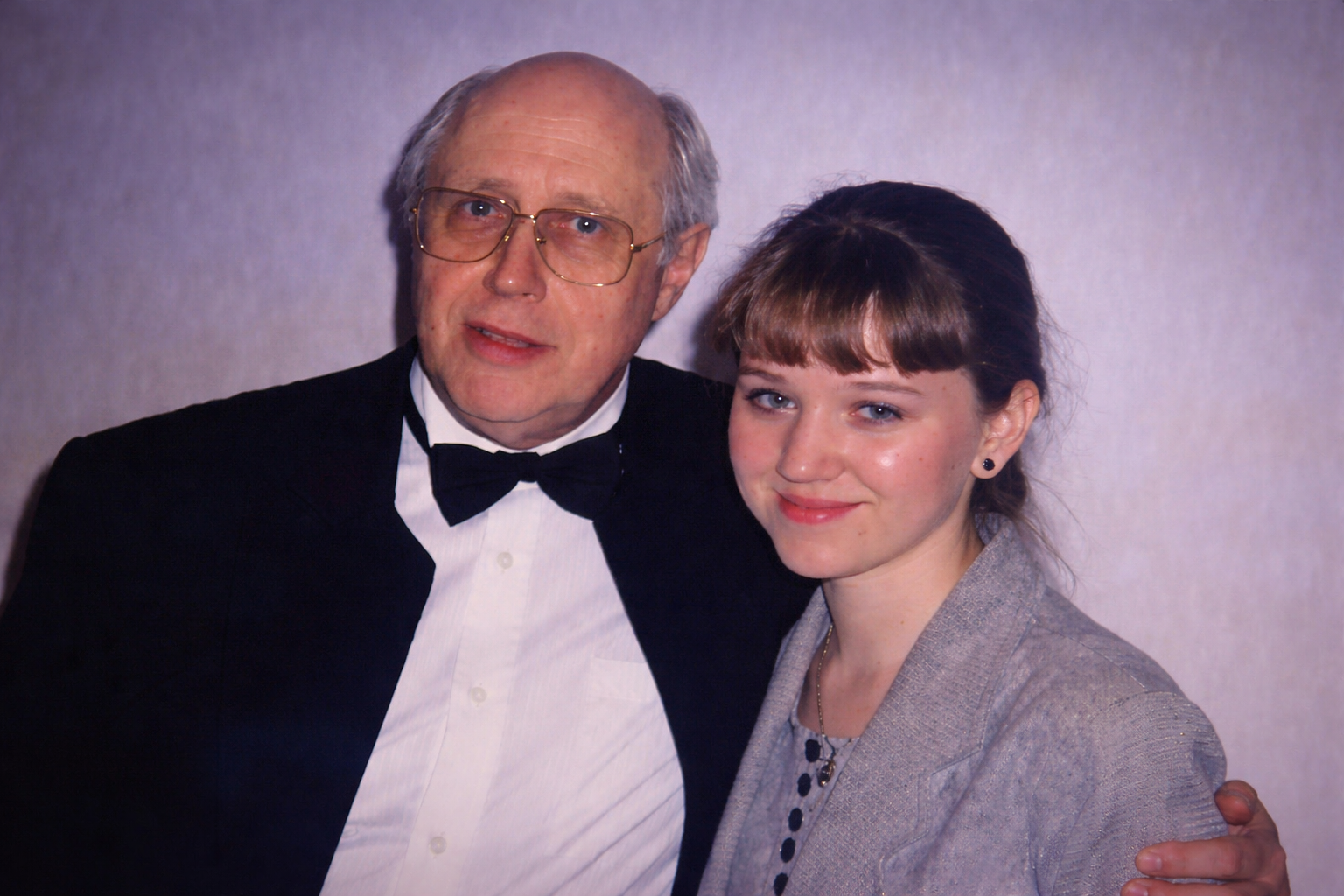
When he saw me, he looked surprised, but the pause was brief — the guards arrived. After reassuring them that everything was fine, Rostropovich invited me to have some green tea. He loved green tea. A teapot and cups were already waiting on the table. My mouth went completely dry; I forgot everything I had planned to say. There was no question of drinking tea — I was far too overwhelmed. Looking at me, he smiled and asked who I was, what my name was, and what I did. I told him my story: that I was also studying the cello, and that I had previously studied with Irina Nikolaevna Zelenetskaya, who had been his fellow student at the conservatory.
Our conversation was interrupted by a violist from the orchestra, who offered to take a photograph of me with Rostropovich. My happiness knew no bounds. Later, it turned out that from the entire roll of film, only one photograph came out successfully — the one of me with Rostropovich. All the other shots were overexposed.
Russia

Cellist • Performer • Educator
Copyright © 2026. Design By Ocbcreative.com